

The companies that look newest are usually the ones to watch.

Every transformational infrastructure wave is led by companies that did not exist when the previous one peaked. That is not an accident. It is how new markets find their builders.


There is a reliable pattern in how people respond to new infrastructure companies during a major technology transition. The instinct is to look for the familiar — the established name, the long customer list, the decade of revenue history. When those signals are absent, the reaction is often skepticism.

But look back at every infrastructure wave that mattered — cloud, mobile, networking, semiconductors — and the same thing becomes clear: the companies that defined each era were, at the beginning of it, the ones no one had heard of. They looked new because the market was new. That is not a coincidence. It is how transformational infrastructure gets built.

AI infrastructure is now in that moment. And understanding why it produces exactly this pattern is more useful than reaching for the wrong framework to evaluate what is being built.

Why this always happens

Incumbents protect what they have. New markets need new builders.

Established companies are not slow because they lack talent or capital. They are slow because they are optimizing for a market that already exists. Their architecture, their sales motion, their organizational incentives — all of it is built around defending and extending an existing position.
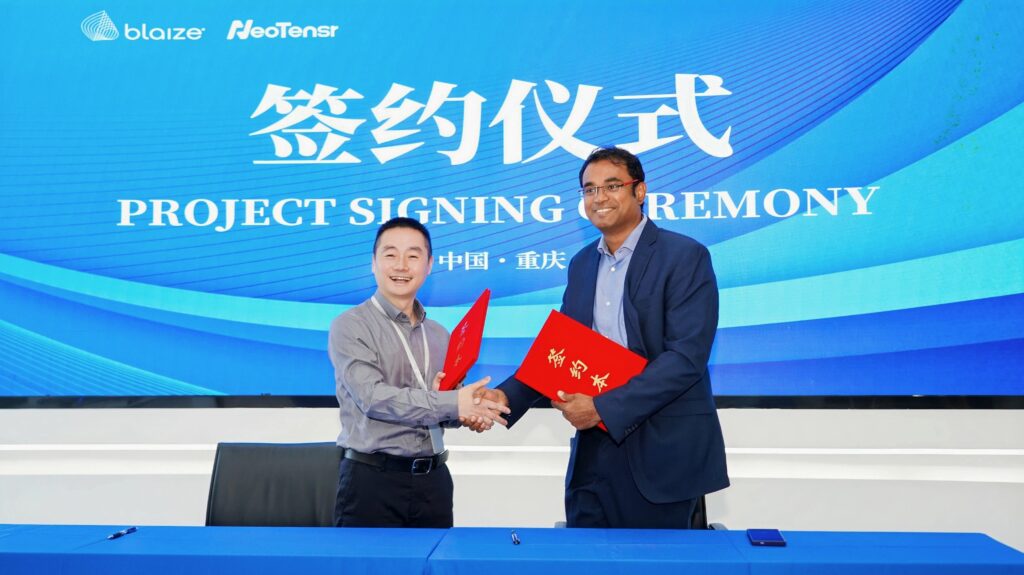
partnership moment

New infrastructure markets do not reward defense. They reward the ability to move before the opportunity is obvious, to build natively for a paradigm that does not yet have established rules, and to form the partnerships and customer relationships that become structural advantages by the time the incumbents arrive.

Phase 01

New capability becomes real

 The technology works. Most established players watch and wait for the market to prove itself.

Phase 02

New builders move first

Companies without legacy architecture to protect build natively. They look new because they are — and the market is too.

Phase 03

The window closes

Demand becomes visible. Incumbents follow. The early builders have already secured the structural position.

Edge AI data center infrastructure is in Phase 02. The demand is accelerating across Asia Pacific — smart city programs, industrial automation, logistics intelligence, enterprise AI adoption at scale. The use cases are not speculative. They are operational systems where latency, efficiency, and reliability directly affect outcomes.

The companies actively securing projects, deploying hardware, and building regional relationships right now are newer ones. That is not a liability. That is where Phase 02 always finds its builders.

What actually signals momentum

In a new market, the proof is in the deployment — not the history.

The traditional proxies for credibility — tenure, incumbency, a long list of legacy customers — are meaningful in stable markets. In a market that is being built in real time, they are the wrong instrument entirely. What matters is different:

The signals that matter at the frontier

  • Is the technology validated in production conditions, not just demonstrated in controlled environments?
  • Are the commercial contracts real — with revenue attached, not letters of intent?
  • Are the partners established players with genuine operational commitment, not co-marketing arrangements?
  • Is the demand structural and growing — or is the company chasing a trend?

This is the lens through which the NeoTensr and Blaize partnership is worth examining. Not through the lens of how long either company has existed, but through what has actually been built, validated, and committed to commercially.


$70M+

Total contracted value between Blaize and NeoTensr across Q4 2025 and 2026

200+

Camera streams per server, with LLM and VLM inference on the same platform

APAC

Multiple edge data center projects actively underway across the region

Those are not projections. They are the output of a deployment that is already underway — a co-branded AI server platform, purpose-built for edge data centers, processing over 200 simultaneous camera streams with real-time computer vision alongside LLM and VLM inference on a single unified architecture.
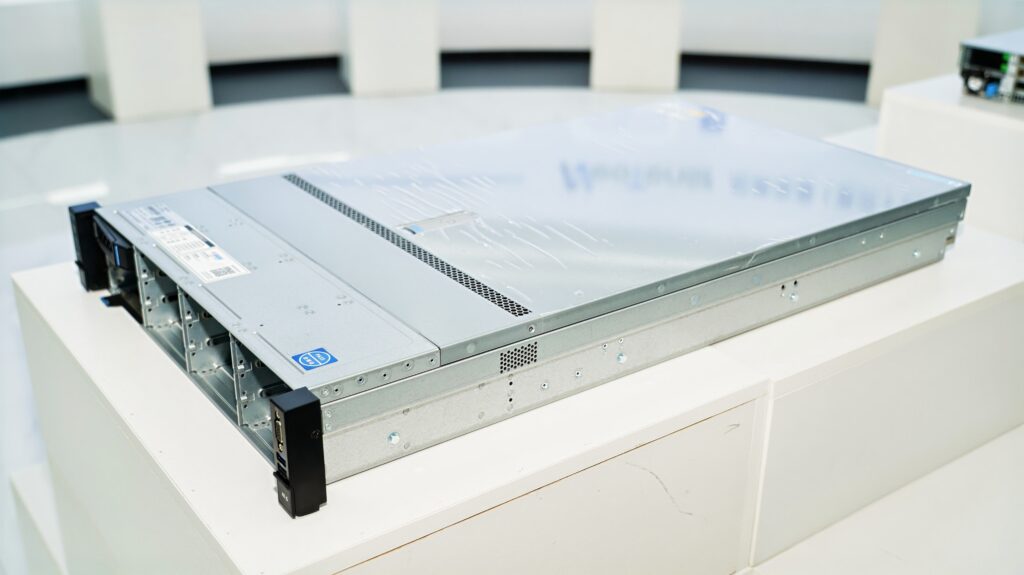
product integration

"NeoTensr is not just deploying AI infrastructure — we are building the compute backbone that will power the next decade of intelligent cities, industrial systems, and data-driven enterprise across Asia Pacific."

The economics of the shift

From pilots to platforms — where AI adoption becomes real.

AI is no longer a capability question. The models work. The platforms exist. What is being determined right now is who builds the infrastructure layer that makes AI operational at scale — across real environments, under real conditions, with real economics attached.

That shift — from experimentation to deployment, from pilots to platforms — is where NeoTensr operates. Its focus is not on demonstrating AI capability. It is on building the full-stack infrastructure that enterprises and governments across Asia Pacific need to actually run AI at scale: edge data centers, integrated AI servers, solutions software, and AI services that generate recurring revenue.

Blaize provides the architectural foundation: a Hybrid AI platform combining the Graph Streaming Processor with GPU infrastructure, enabling both real-time perception and advanced reasoning on the same physical system. That architecture reduces deployment friction, lowers operational cost, and opens a path from hardware to software to services — the progression that defines how infrastructure markets mature.

"We expect each stage to drive progressively higher-margin revenue — from hardware to software to services."

The right frame

New money, new demand, new leaders — every cycle.

New capital flows into new markets. That is not optimism — it is the structural reality of how infrastructure investment works. When a new compute paradigm emerges, the capital that builds it does not come primarily from companies defending their existing position. It comes from those who see the new market clearly and move while the opportunity is still open.

Edge AI cloud infrastructure across Asia Pacific is attracting exactly this kind of capital and this kind of operator. The demand is real. The technology is proven. The market is large, growing, and in the early stages of being claimed.

The companies that will define it are being built right now. They look new because the market is new. In five years, that will be the part of the story no one mentions — because by then, what they built will be the infrastructure everyone else is building on top of.

"The next generation of AI leaders will not just build intelligence. They will operationalize it — market by market, deployment by deployment, with the conviction to move before the opportunity is obvious."